← journalThu Aug 06hoian · route · danang · myson · boat · food6 min
Things to Do in Hoi An 2026: What's Worth It, Sorted by How You Get There
The honest Hội An list for 2026 — Old Town, lantern nights, An Bàng, basket boats, Mỹ Sơn, Huế — organised the way drivers think about it: what's on foot, what's a bicycle ride, and what needs a car.
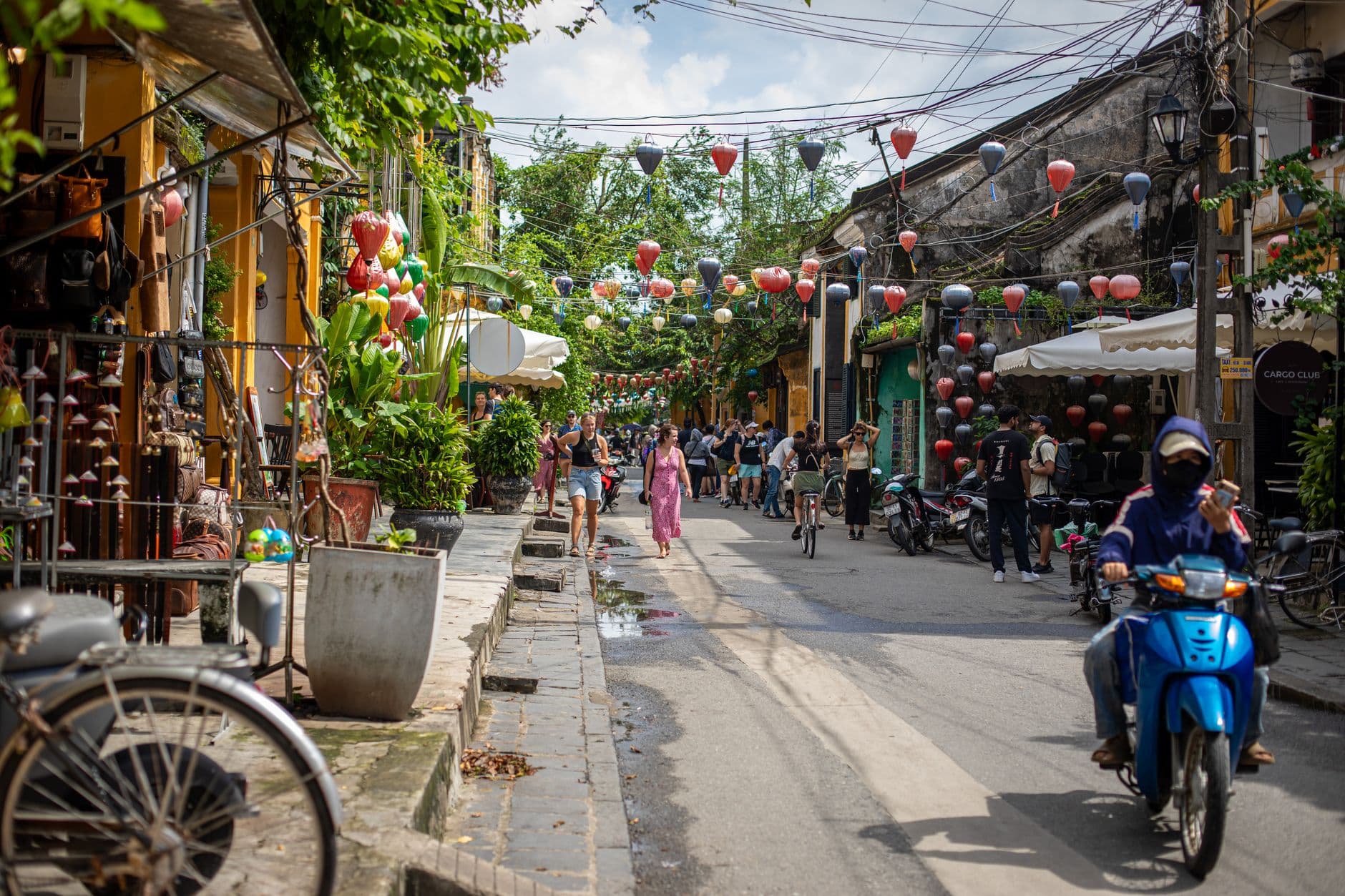
Ask ten drivers what actually fills a good Hội An trip and you get a consistent answer: walk the Ancient Town in its car-free hours, be there for a lantern night, cycle to An Bàng, ride a basket boat through the Cẩm Thanh palms, eat cao lầu where it was invented, and give one dawn to Mỹ Sơn. Everything else is optional. What follows is that list — organised the way we plan it from behind the wheel: by how you reach each thing.
Hội An is compact. The UNESCO core is about 30 hectares; the beach, the river islands and the craft villages all sit within a short ride of it. Trying to compress the town into 24 hours is the classic first-timer mistake — three to five unhurried days is the trip that works.
What can you do entirely on foot?
The Ancient Town — the preserved merchant quarter of Chinese shophouses, assembly halls, temples and the Japanese Covered Bridge (Chùa Cầu) — is walked, never driven. Cars and motorbikes are banned from the grid during pedestrian hours, roughly 9–11:30 am and 3–9 pm, and no car enters the heritage streets at any time. In practice your driver drops you at the perimeter and you are at the bridge within a few minutes on foot; agree a pickup corner and a time, and the car reappears there.
The fee is now charged per building — 20,000 VND per person per heritage site entered, the same for Vietnamese and foreign visitors, under a Đà Nẵng People's Council resolution in force since 10 August 2026. It replaced the bundled 120,000-VND five-site ticket most English pages still quote. A morning's worth: one or two merchant houses (Tấn Ký and Phùng Hưng are the classics), the Phúc Kiến (Fujian) assembly hall for the most ornate interior, the Japanese Bridge, and the central market. Then coffee. Avoid the 11:30 am–3 pm window, when the bikes return and the heat peaks — that gap is exactly when a beach or a long lunch belongs.
After dark the same streets change character: lanterns on, candle boats drifting on the Thu Bồn, the night market trading on An Hội islet. If your visit can touch the 14th night of a lunar month, the town switches off its electric light for the full-moon lantern night. The 2026 dates: 30 May, 28 June, 27 July, 26 August, 24 September, 23 October, 22 November.
What's within an easy bicycle ride?
More than most visitors expect, because the land is pancake-flat.
An Bàng beach — about 4 km north-east of the Old Town on a straight, level road through rice fields. It is the beach locals choose: wide sand, a gentle shelf, calm water from March to September, and a line of food shacks. Cửa Đại, the other named beach, has spent a decade losing sand to erosion; swim at An Bàng, especially with children.
Cẩm Thanh coconut village — the nipa-palm waterways south-east of town, where rowers take you through the channels in round bamboo basket boats for about 90,000 VND a person, life jackets included, crab-fishing demonstrations and occasional boat-spinning theatrics thrown in. Cyclable in under an hour, or a 15-minute drive if you would rather arrive fresh.
Cẩm Nam and Cẩm Kim — the rural islands across the Thu Bồn, one bridge away, where the rice paddies begin and the food is street-priced. An hour's loop here shows you the Hội An that residents actually inhabit.
Which day trips justify a car — and how long is each drive?
This is where a driver changes the shape of the day, because the car waits while you visit and the timings are built around light and crowds rather than a coach schedule.
Mỹ Sơn Sanctuary — the Chăm brick-tower complex, UNESCO-listed, about an hour's drive west through Quảng Nam countryside. The move that matters: leave Hội An around 4:45–5:00 am, walk in at opening, and you get the towers in first light before the tour buses stack up mid-morning. Your driver naps and drinks coffee in the lot; you surface two hours later to air-conditioning. Back in town by late morning, day intact.
Cù Lao Chàm (Chàm Islands) — the marine reserve about 18 km offshore. Boats leave from the Cửa Đại pier area, roughly April through September when the sea allows; the drive to the pier is 15 minutes, and the snorkelling day comes back mid-afternoon.
Huế — the imperial capital, around three hours north with the Hải Vân Pass in the middle, which is half the reason to go. Feasible as a long day trip; better as an overnight with the pass driven slowly and photo stops where the coaches cannot pull over.
Thanh Hà pottery village — 3 km west, a half-morning among fourth-generation potters with no crowds. Cyclable, or a ten-minute hop by car on the way out to Mỹ Sơn.
Bà Nà Hills and the Golden Bridge — the hand-held bridge from the photos, inside a theme park roughly 50 km north. With a week in the region, fine. With three days, the honest advice from the front seat is to spend the time elsewhere.
What about food, classes and craft?
The canon is short and local: cao lầu (which by tradition exists properly only in Hội An), white rose dumplings, cơm gà (chicken rice), mì Quảng, the bánh mì stalls, and bánh đập across the water in Cẩm Nam. A cooking class covers several of these in 3–4 hours, usually opening with a market walk. Half-day crafts worth the time: silk lantern making, pottery at Thanh Hà, and Hội An's famous tailoring if your dates allow fittings.
When should you come?
The weather splits into three usable seasons: March to August is hot and dry — the swimming months; September to early December is the wet season, with genuine flood risk in October and November; December to February is cool and grey but fine for everything except the beach. Build beach hopes around the first window and day-trip flexibility around the second.
What's honestly skippable?
A pre-booked generic city tour — the Old Town is small, self-guided and better on foot at your own pace. A full day at Bà Nà on a short trip. And the candle-boat float on a crowded full-moon weekend, when the boats can stack three deep; the lanterns go out on the water most evenings now, so a quieter night gives you the same picture without the queue.
A three-day shape that works from the road
Day one: land at Đà Nẵng, 45 minutes down the coast, slow afternoon, river sunset, Old Town dinner during pedestrian hours. Day two: Ancient Town on foot in the morning, cao lầu lunch, basket boats at Cẩm Thanh late afternoon. Day three: cycle to An Bàng for the morning and lunch on the sand, Cẩm Nam for bánh đập late in the day, lantern streets after dark. With more days: Mỹ Sơn at sunrise, a Chàm Islands boat, a cooking class — and one empty day, the most underrated item on this whole list.
When one of these days needs four wheels — the dawn run to Mỹ Sơn, the pass to Huế, the airport at either end — describe it at hoiandriver.com/quote and a real driver will price it; one click books the car and the dates with nothing to pay now.
good questions
- How many days do you need in Hoi An?
- Three to five at an easy pace. One Old Town morning, one beach afternoon and one day trip fit into three days; Mỹ Sơn at sunrise, the Chàm Islands and a cooking class are what the fourth and fifth days are for.
- How much is the Hoi An Ancient Town ticket?
- 20,000 VND per person per heritage site you enter, applied identically to Vietnamese and foreign visitors since Resolution 98/2026/NQ-HĐND took effect on 10 August 2026. It replaced the old bundled ticket of 120,000 VND for five sites that most English pages still quote.
- When is the Old Town closed to cars and motorbikes?
- Roughly 9–11:30 am and 3–9 pm daily it is pedestrian-only. Cars never enter the heritage grid; drivers drop you at the perimeter a few minutes' walk from the Japanese Bridge.
- What are the Hoi An lantern night dates for 2026?
- The 14th night of each lunar month: 30 May, 28 June, 27 July, 26 August, 24 September, 23 October and 22 November 2026.
- Is An Bang or Cua Dai the better beach?
- An Bàng, for most people — about 4 km from the Old Town on a flat road, gently shelving, calm from March to September. Cửa Đại has lost much of its sand to a decade of erosion.
- Is My Son worth the trip from Hoi An?
- Yes — it is the region's essential day trip. The Chăm tower sanctuary sits about an hour's drive west, and going at sunrise puts you inside the ruins before the coach groups arrive.
- Is Ba Na Hills worth it from Hoi An?
- Only with a week to spare. The Golden Bridge photographs beautifully, but it is a theme park roughly 50 km north — on a three-day trip that time is better spent in the Old Town, at the beach or at Mỹ Sơn.