← journalThu Aug 06festival · myson · hoian · route · danang5 min
Kate Festival 2026: The Living Chăm Rituals Behind the Mỹ Sơn Day Trip
Katê (Lễ hội Katê) is the Chăm people's greatest festival — three days of tower rituals expected around early October 2026. It happens far south of Hội An, but it explains exactly what the towers of Mỹ Sơn, an hour from town, were built to do.
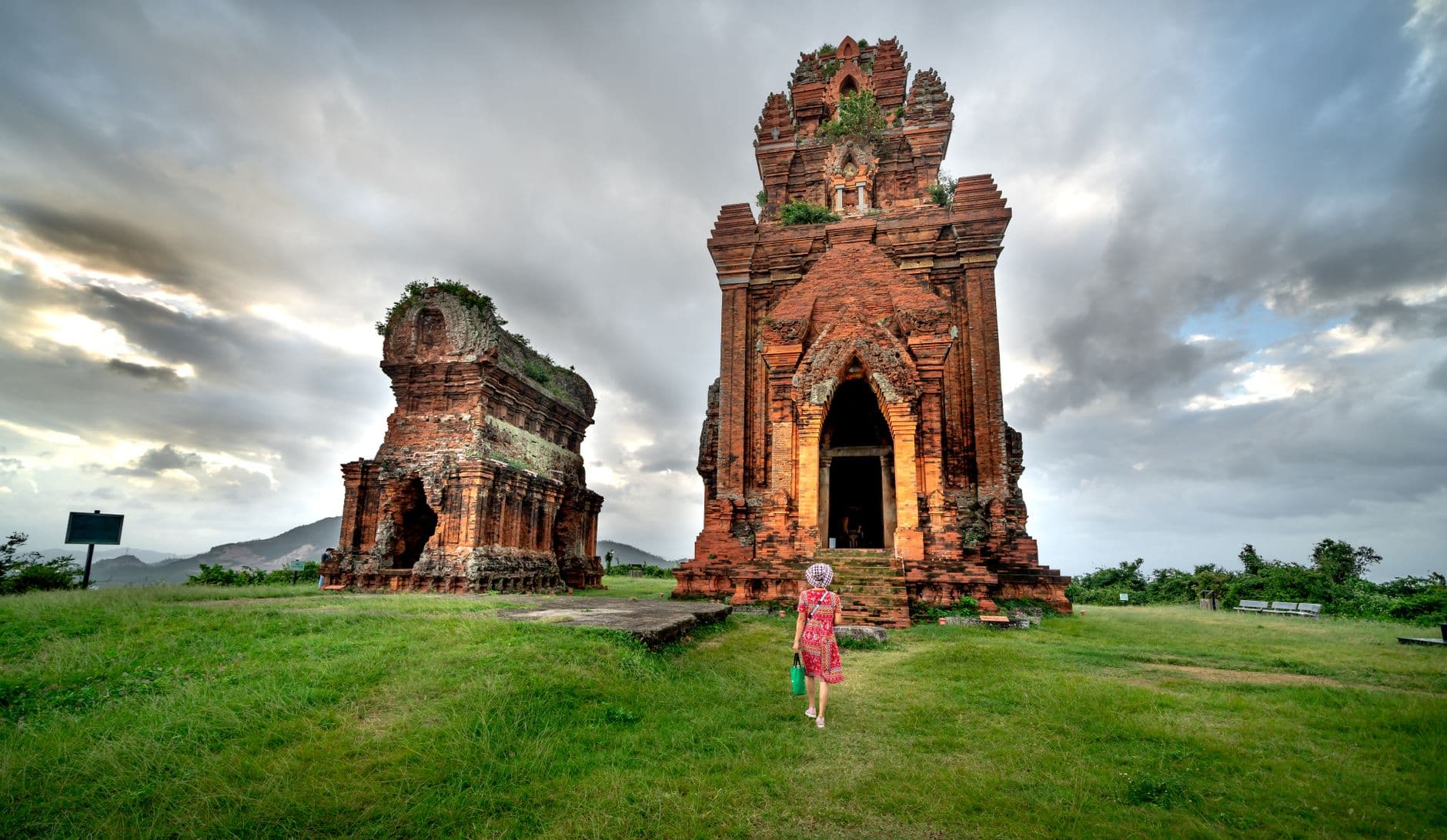
Drive anyone to Mỹ Sơn and the same question comes through the back seat as the brick towers rise out of the jungle: what actually happened here? The most honest answer is not in the site museum — it is a festival that still happens every autumn, several hundred kilometres down the coast. Katê (Lễ hội Katê) is the greatest festival of the Chăm people, heirs of the Champa kingdom that ruled this shoreline for a thousand years, and for three days each year it turns the surviving southern temple-towers back into what all of them once were: living sanctuaries with drums at the door.
When is Katê in 2026 — honestly?
Katê begins on the first day of the seventh month of the Chăm calendar (Chăm lịch), a lunisolar system that refuses to sit still against Western dates. In practice it opens in late September or early October and runs three days. For 2026, the exact Gregorian dates had not yet been published by Chăm religious authorities or the provincial culture departments when this was written; recent years point to around early October 2026, and that estimate is all anyone can honestly give you. The confirmed schedule appears a few weeks out through Ninh Thuận's provincial channels and Chăm community announcements. We would rather flag an approximate date than invent a precise one.
Where does it happen — and why can't you drive there from Hội An?
The festival centres on three tower complexes that survived as working temples: Po Klong Garai, the famous group on Trầu Hill in Ninh Thuận, dedicated to its namesake king; Po Rome, also Ninh Thuận; and Po Nagar in Khánh Hòa, tower of the mother-goddess Yang Pô Inư Nagar. From the towers the celebration pours downhill into the Chăm villages of Ninh Phước district — Hữu Đức, Mỹ Nghiệp and their neighbours — for family altars, music and feasting.
All of that lies several hundred kilometres south of Hội An. There is no version of this trip that fits a day behind a windscreen, and we won't pretend otherwise. From here, Katê is a window — the key that unlocks the Champa site that is an easy drive.
What happens across the three days?
The heart of Katê is a fixed sequence of rites performed by Chăm priests at the towers, described consistently across Vietnamese cultural sources:
- Lễ rước y trang — the procession bringing the deity's sacred garments and regalia up to the tower. By tradition the Raglai people, highland neighbours of the Chăm, guard these costumes through the year and hand them over for the festival.
- Lễ mở cửa tháp — the ceremonial opening of the tower door, admitting the priests to the sanctuary.
- Lễ tắm tượng thần — the bathing of the deity's statue or mukhalinga.
- Lễ mặc y phục — the robing of the statue in the newly arrived garments, followed by the great tower offering, đại lễ cúng tháp.
Around the rites, the sound: the paired Ginăng drums, the Baranâng drum, the piercing Saranai horn, and lines of dancers in traditional dress. One Vietnamese account describes the drums beating "như nhịp tim cộng đồng" — like the heartbeat of the community. Vietnam's Ministry of Culture, Sports and Tourism inscribed Katê as national intangible cultural heritage in 2017 (Decision 2459/QĐ-BVHTTDL, 20 June 2017). English write-ups sometimes call it the "Chăm New Year"; more exactly it is a festival of remembrance — deified kings, ancestors, rain and harvests — at the seventh month's opening.
What does any of this have to do with Mỹ Sơn?
Everything. The brick sanctuary an hour from Hội An — a valley of towers raised between roughly the 4th and 13th centuries as the spiritual centre of Champa, UNESCO-listed since 1999 — is the grandest temple-city that civilisation ever built. It is also silent: the towers are ruins, and no living Chăm congregation worships there. Katê is what Mỹ Sơn sounded like when it was alive. The procession, the opened door, the bathed and robed image — those are the ceremonies these towers were engineered to hold. See the ruins and the festival makes sense; learn the festival and the ruins stop being rubble and become architecture with a job. Beneath both runs an even older layer, the Sa Huỳnh culture from which the Chăm world emerged — this coast was ancient long before Hội An's trading houses went up.
How do you actually build the Champa day from Hội An?
This is the part we can speak to from the driver's seat, because we make this run constantly.
The dawn version, which is the right version. Pickup in Hội An at 4:45–5:00 am, about an hour west through the dark paddies of Duy Xuyên, and you are at the gate for opening. From the ticket barrier, electric shuttle carts run visitors up to the tower groups; the walk back down through the valley as the light comes up is the best half-hour of the day. You get the towers close to private for a while — by mid-morning the coach groups own the paths, and by noon the brick radiates heat like an oven wall. Your driver waits in the lot with the air-conditioning ready; the whole outing lands you back in Hội An by late morning.
The full Champa day. Pair the morning ruins with the Chăm sculpture museum in Đà Nẵng in the afternoon — roughly an hour and a half of driving between the two — where the carved dancers, gods and pedestals excavated from Mỹ Sơn itself put faces on what you walked through at dawn. It is the closest thing central Vietnam offers to seeing Katê's world in one day.
If your trip lands around Katê season. Early October in Quảng Nam is the front edge of the rain months, which strengthens the case for the dawn slot at Mỹ Sơn — mornings hold the dry window, and the towers in low mist are their own reward.
When you want the dawn run driven — the 4:45 pickup, the wait at the site, the museum leg after — sketch the day at hoiandriver.com/quote. A real driver prices it, and one click holds your dates, with nothing to pay now.
good questions
- When is the Kate Festival in 2026?
- It opens on the first day of the seventh Chăm-calendar month, which lands in late September or early October. The exact 2026 Gregorian dates had not been officially published at the time of writing — expect roughly early October and confirm against Ninh Thuận provincial announcements nearer the time.
- What is the Kate Festival?
- Katê (Lễ hội Katê) is the most important festival of Vietnam's Chăm people: three days honouring deified kings, ancestors and the goddess Po Nagar, opening with priestly rituals at the temple-towers and flowing into the villages. It is counted among Vietnam's fifteen biggest festivals.
- Where does Kate take place?
- At the working Chăm towers of the south — Po Klong Garai and Po Rome in Ninh Thuận, Po Nagar in Khánh Hòa — and then in Chăm villages such as Hữu Đức and Mỹ Nghiệp. That is several hundred kilometres south of Hội An.
- Can you visit the Kate Festival from Hoi An?
- Not as a day trip — no realistic drive covers it. From Hội An the meaningful way into Chăm culture is Mỹ Sơn, the Champa sanctuary about an hour away, which the same civilisation built.
- How is Kate connected to My Son?
- Both belong to Champa. Mỹ Sơn was its greatest temple-city, built between roughly the 4th and 13th centuries and now a silent UNESCO ruin; Katê is what the tower rites still look like alive, performed at southern towers that never stopped being temples.
- What are the main rituals of Kate?
- The procession of the deity's sacred costumes (lễ rước y trang, kept through the year by the Raglai), the opening of the tower door (lễ mở cửa tháp), the bathing of the statue (lễ tắm tượng thần), and the robing and great tower offering (lễ mặc y phục, đại lễ cúng tháp) — to Ginăng drums and the Saranai horn.
- What is the best way to visit My Son from Hoi An?
- By car at dawn: leave around 4:45–5:00 am, drive about an hour west, and walk the towers in first light before the coaches. Your driver waits at the site; many travellers pair it with the Chăm sculpture museum in Đà Nẵng the same day.