← journalThu Aug 06food · hoian · route6 min
Cao Lau 2026: The Noodle That Only Works in Hoi An — and Where Drivers Stop for It
Cao lầu depends on a Chăm-era well, wood ash from Cù Lao Chàm and one Hội An family's night shift. The full story — history, chemistry, how to spot a real bowl — plus where working drivers actually eat it.
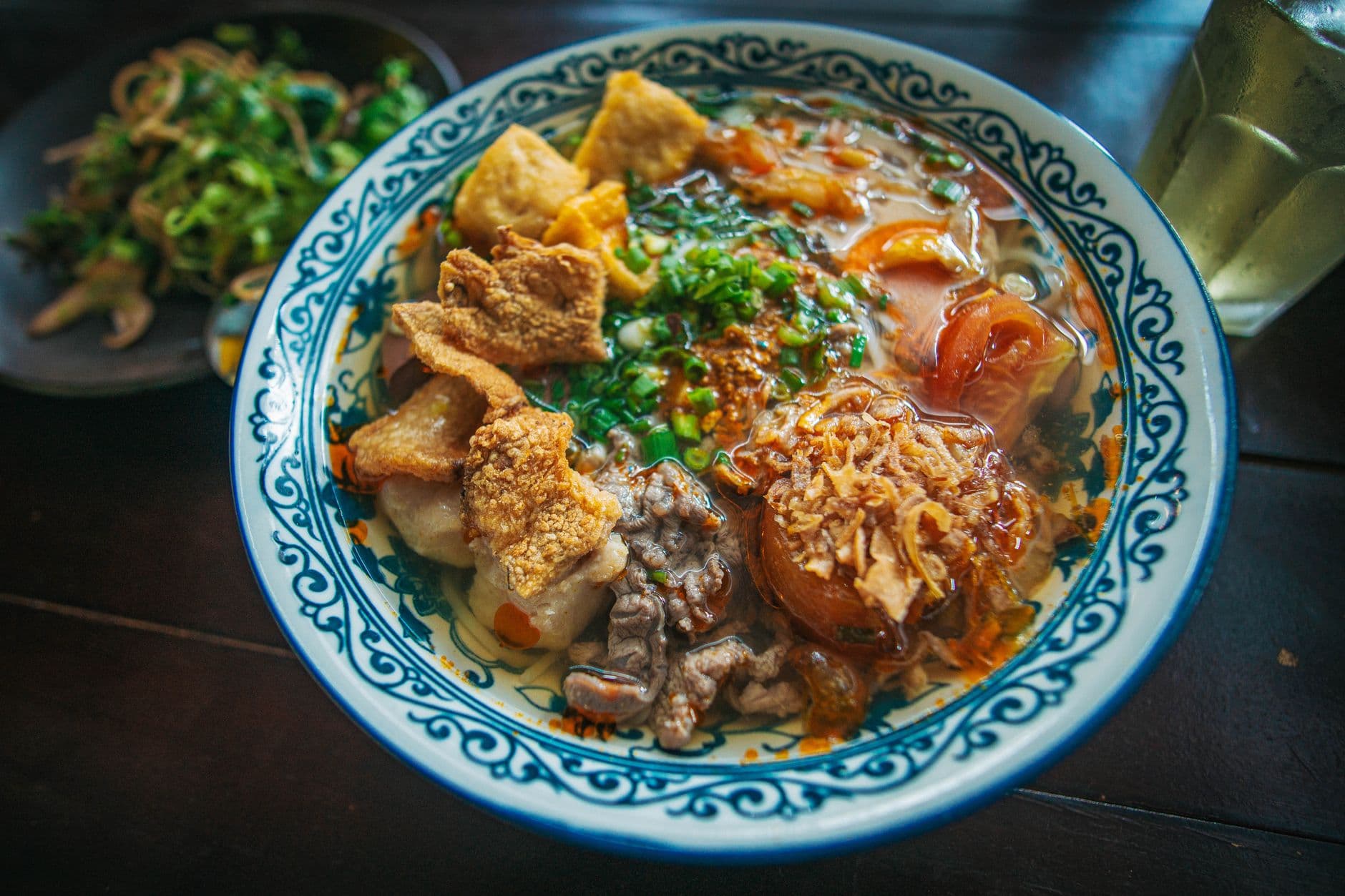
Ask a driver where to eat between an airport run and a Mỹ Sơn pickup and the answer, more often than not, is a bowl of cao lầu at a market stall — 40,000 VND, ten minutes, done. What makes that everyday lunch remarkable is that it is the one Vietnamese noodle dish with a legitimate claim to being geographically impossible to export. The noodle is alkalised with ash from trees on an island 15 km offshore, the water tradition traces to a Chăm well a thousand years old, and the entire supply of the real thing comes off one family's night shift. Cook the same recipe in Hà Nội and you have made a tribute, not the dish.
What is actually in the bowl?
Cao lầu is assembled, not simmered. Blanched bean sprouts sit at the bottom; over them go the noodles — thick, faintly yellow-brown, with a chew somewhere between udon and Chinese alkaline noodles; then thin slices of pork shoulder marinated char-siu style with five-spice, garlic, soy and sugar, which Hội An calls xá xíu; then a fistful of herbs — mint, perilla, Vietnamese coriander, lemon basil; then crisp-fried squares of the same noodle dough. Two or three spoonfuls of the dark, salty liquid from the xá xíu pan go over the top. That is all the liquid there is.
The scale matters: phở carries something like a litre of broth, mì Quảng a quarter-bowl of turmeric stock, cao lầu a slick at the bottom. Think of it as a warm noodle salad. Diners who ask for more broth have misread the dish — there is none.
Why does the noodle refuse to leave town?
Four inputs are non-negotiable, and none of them is style. Rice from Quảng Nam. Water carrying the dissolved alum and calcium salts of the Thu Bồn delta's alluvial aquifer. Lye water leached from the ash of particular trees that grow on Cù Lao Chàm — the island you can see from An Bàng beach, a boat ride from the Cửa Đại pier in season. And a slow production line: rice soaked overnight in the filtered ash liquor, ground, kneaded, steamed repeatedly with each cycle taking close to an hour, cut thick, and cooled under banana leaves. The alkaline chemistry is what the ash is for — carbonate salts tighten the starch structure, tint the grain's flavonoids yellow, and produce that springy, slightly slippery bite. Japanese ramen gets there with industrial kansui; cao lầu still gets there with a bonfire and a filter.
Swap city tap water for aquifer water, or bottled lye for island ash, and the noodle comes out paler, softer, more ordinary. This is terroir in the strict wine sense — a food that cannot be separated from its geography — and it is why no exporter has scaled it in four centuries.
Who actually makes it?
Essentially one family. Two workshops of the Ngọc family — the patriarch, Tạ Ngọc Trái, is the fourth generation — produce all of Hội An's traditional cao lầu noodles between them. The method reportedly arrived from a Chinese cook who taught the patriarch's great-grandfather in the late 1800s, and it has stayed a closed family secret since: no outside apprentices, nothing published. The working rhythm is brutal and unromantic — starting around 1 am, finishing near 5 am so noodles reach the markets by sunrise, 364 days a year with only the first day of Tết off.
One honest footnote the marketing versions skip: the family no longer draws from the Bá Lễ well itself. They dug a private well on their own land whose water matches the same aquifer closely enough to work. Both shafts tap the same alluvial fan; the famous well is now the geological reference point rather than the daily source.
What is the Bá Lễ well, and can you drive to it?
You cannot — and that is half its charm. The well hides in a lane at 45/17 Trần Hưng Đạo in Minh An ward, between Trần Hưng Đạo and Phan Châu Trinh streets, deep inside the walking-only heritage grid. Any Old Town drop-off puts you within a few minutes on foot. It is a square shaft of mortarless brick in the Chăm style, with ironwood panels at the base, dated by local heritage records to the 8th–10th centuries, when this bank of the Thu Bồn belonged to the Champa port world. It is roughly 4 metres deep and is said never to have failed, drought or not. The name is 20th-century: a woman remembered as Bà Bá Lễ paid 100 Indochinese piastres to restore it in the early 1900s, and of the roughly 80 ancient wells documented around Hội An, hers became the famous one — because of the noodle.
Go before 9 am, when deliveries are still winding down and the lane still carries the smell of damp rice and woodsmoke. Several of the town's longest-running cao lầu shops sit in the streets around the well. That clustering is not a coincidence.
Did the Japanese invent it?
The popular theory says cao lầu descends from soba or udon, left behind by Hội An's Japanese merchant colony. The historical scaffolding is genuine: from the late 1500s the port then called Faifo held a Japanese quarter, whose community raised the covered bridge (Chùa Cầu) in 1593–95 and numbered around 300 people in the early 1600s. Then Japan sealed itself: the sakoku edicts of 1633 and 1635 forbade travel, the Portuguese were expelled in 1639, and the last Japanese resident left Hội An in 1637. The noodle's udon-like heft keeps the theory alive on every food tour.
But no primary document ties the dish to a Japanese predecessor, and the Chinese fingerprints — the xá xíu pork, the soy-dark sauce, alkaline noodle technique itself — are stronger evidence. The Chăm layer supplies the well, the ash and the rice culture underneath. The version that best fits the record is the simplest: cao lầu took shape in the 17th century, when the Nguyễn Lords opened the port and Chinese, Japanese and Vietnamese cooks worked within shouting distance of one another for generations.
How do you find a real bowl in 2026?
Straightforwardly: most cao lầu sold in Hội An today is not made with the canonical noodle. The family's nightly output covers a few dozen long-standing shops and the markets; the tourist-strip menus and buffets mostly use industrial noodles dyed toward the right colour. The tells work in your favour. A real noodle is about 4–5 mm wide, dull yellow-brown rather than bright yellow, and pushes back for a fraction of a second before it yields. The croutons should obviously be the same dough, not fried wonton skins. The pork should be thin, dark-edged xá xíu slices, not soft braised chunks. And the bowl should be nearly dry — floating noodles mean the kitchen misread its own town's dish.
The rule of thumb drivers use: the older the family and the shorter the menu, the better the noodle. Market stalls charge about 30,000–50,000 VND; restaurants 50,000–95,000 VND. Late morning is the window — the day's xá xíu is just out of the pan. The dish is officially recognised as a signature food of Quảng Nam by the national tourism authority; talk of listing the noodle-making craft as provincial intangible heritage remains informal as of mid-2026.
Eat it in the right order: mix from the bottom like dressing a salad, croutons left on top and broken as you go, lime after the first turn, the local chili paste if you want heat, herbs eaten between mouthfuls to reset the palate. Most locals never touch the fish sauce bottle.
Plenty of our airport and day-trip routes bend past a good bowl with no drama — if you want a driver who plans the lunch stop as carefully as the pickup, describe your day at hoiandriver.com/quote; a real driver prices it and one click sets the date, with nothing to pay now.
good questions
- What is cao lau?
- Hội An's signature noodle dish: thick chewy yellow-brown rice noodles over bean sprouts, topped with five-spice xá xíu pork, fresh herbs and crispy croutons cut from the same dough, dressed with two or three spoonfuls of dark pork sauce. It is not a soup — there is no broth to add.
- Why can cao lau only be made in Hoi An?
- The canonical noodle needs Quảng Nam rice, water with the mineral profile of the Bá Lễ aquifer, lye leached from the ash of trees on Cù Lao Chàm island, and a repeated steaming process. Change any one input and the noodle turns paler, softer and blander.
- Is cao lau Japanese in origin?
- Possibly influenced, not proven. Hội An had a Japanese merchant quarter until the sakoku isolation edicts emptied it in the 1630s, and the noodle's udon-like chew keeps the theory alive — but no primary document supports direct descent, and the Chinese evidence (xá xíu, soy, alkaline technique) is stronger.
- How much does cao lau cost?
- Roughly 30,000–50,000 VND at market stalls and 50,000–95,000 VND in restaurants. It is a complete one-bowl meal, best in the late-morning window when the day's xá xíu is freshest.
- How do you eat cao lau properly?
- Mix first — turn the noodles through the sauce like dressing a salad. Leave the croutons on top and break them as you go, add lime after the first mix, use the local chili paste rather than Sriracha, and eat the herbs between bites.
- How can you tell a real cao lau noodle from a substitute?
- Real: about 4–5 mm wide, dull yellow-brown, with a firm bite that resists for a beat. Warning signs: bright uniform yellow, soft wheat-noodle texture, wonton-skin croutons, braised pork chunks instead of thin xá xíu slices, or noodles floating in liquid.
- Where is the Ba Le well?
- Down a lane off Trần Hưng Đạo street (45/17 Trần Hưng Đạo, Minh An ward), between Trần Hưng Đạo and Phan Châu Trinh. Cars cannot enter — it is a short walk from any Old Town drop-off point.