← journalThu Aug 06hoian · weather · festival · danang · route5 min
Best Time to Visit Hoi An 2026: A Driver's Month-by-Month Calendar
Twelve months of Hội An from behind the wheel — which window is dry and bright, when the river rises, every 2026 lantern night, DIFF Saturdays, and what each season does to drive times and day trips.
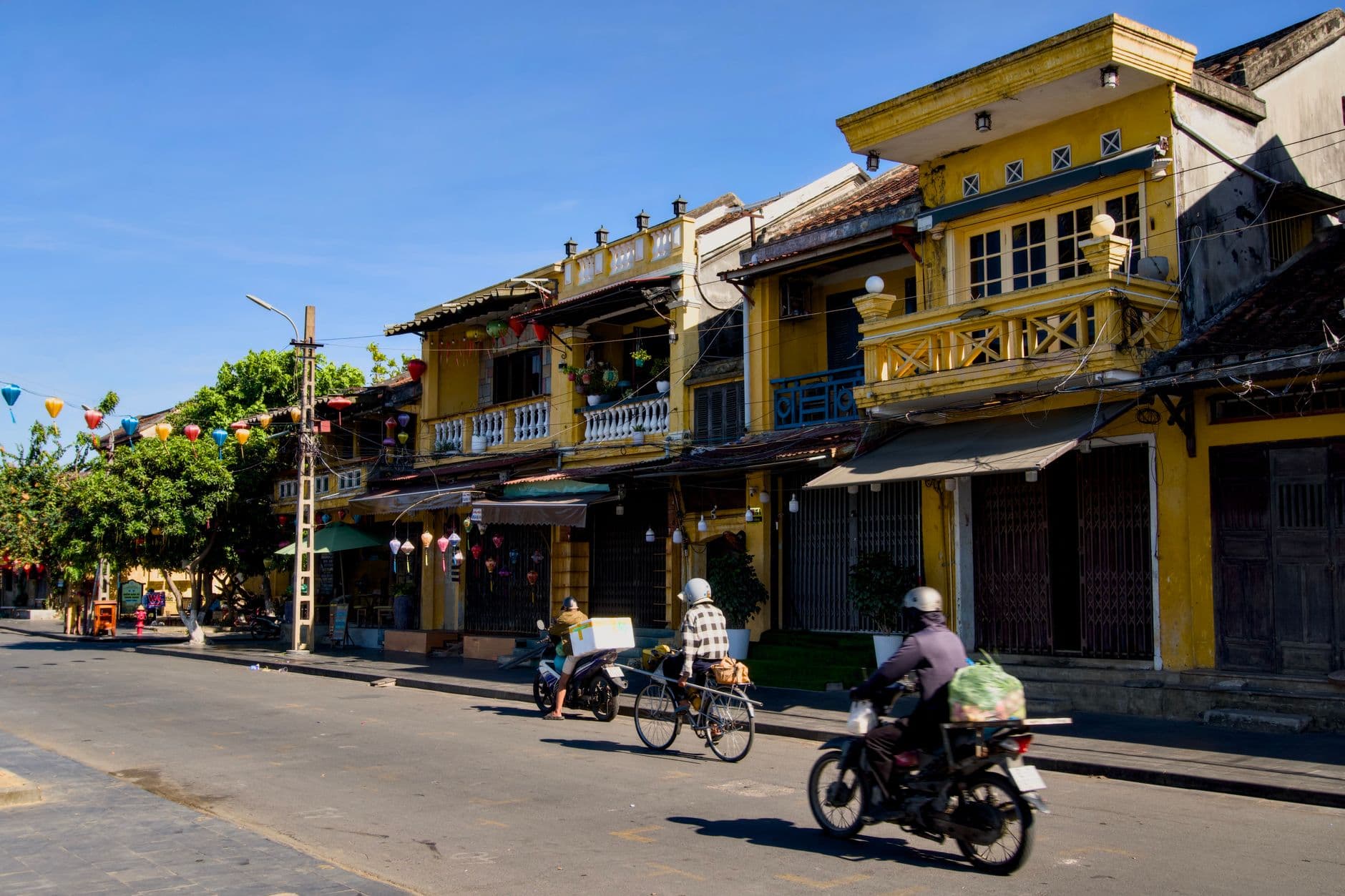
Nobody watches the Hội An weather more closely than the people who drive it for a living. A dry February means the Hải Vân Pass is clear for photographs; a November low-pressure system means rethinking tomorrow's Mỹ Sơn run before breakfast. Central Vietnam splits into a bright dry half-year and a wet, storm-fed one, and every trip we quote sits somewhere on that curve. Here is the whole calendar, month by month, with the part other guides skip: what each season does to the roads.
The quick answer
- Best overall: February to April — dry, bright, around 25–30°C, everything drivable on schedule.
- Beach and long days: May to August — the hottest stretch, June and July peaking in the mid-30s.
- Lowest prices, fewest people: September to November — the rain months; October–November carry real flood risk and the year's cheapest rooms.
- Cool and calm: December to January — low-to-mid 20s, softest light, with Tết inflating prices at the end.
- Lantern nights: every month — the festival follows the 14th lunar day, so no month misses one.
The year at a glance
| Month | Weather | What's on | From the driver's seat |
|---|---|---|---|
| January | Cool, mild, mostly dry (~20–25°C) | Lantern night 2 Jan; Tết can land late-month | Easy driving; book early if Tết overlaps |
| February | Drying, brightening (~25–30°C) | Lantern night 1 Feb; Tết often here | Tết week: heavy holiday traffic, shut shops |
| March | Dry, bright, warm | Nguyên Tiêu lantern night 2 Mar — the year's biggest | The best road month of the year |
| April | Dry, high sun (~27–30°C) | Lantern nights 1 & 30 Apr; 30/4–1/5 holiday | Domestic holiday traffic surges late-month |
| May | Hot, long days | Lantern night 30 May; DIFF opens 30 May | Start day trips at dawn; DIFF Saturday jams |
| June | Hottest, most sun | Lantern night 28 Jun; DIFF Saturdays 6, 13, 20, 27 | Midday is for air-conditioning, not walking |
| July | Hot, peak season | Lantern night 27 Jul; DIFF finale 11 Jul | Summer crowds; pre-book airport runs |
| August | Hot, humid, first storms | Lantern night 26 Aug | Still beach weather; showers build late |
| September | Warm, rain rising | Mid-Autumn eve lantern night 24 Sep | Morning windows still reliable |
| October | Storm season, flood peak (~24–30°C) | Lantern night 23 Oct | Buffer your transfers; expect reroutes |
| November | Wettest month (~23–28°C) | Lantern night 22 Nov | Cheapest month; plans need slack |
| December | Drying, mild (~21–26°C) | Lantern night 22 Dec; NY uptick | Comfortable again; holiday traffic returns |
What does each season feel like on the road?
February–April is the season that sells the region. The winter damp burns off, the river sits low, and every route runs to its best time: the airport in 45 minutes, Mỹ Sơn in an hour, Huế over a clear Hải Vân. March is the pick — warm, dry, and carrying Nguyên Tiêu, the first full moon of the lunar year and the grandest lantern night on the calendar.
May–August is heat management. Afternoons in June and July reach the mid-30s, so the local rhythm is the right one: An Bàng or the pool at dawn, shade or air-conditioning through the middle, streets again after five. For drivers this is the season of early starts — the 5 am Mỹ Sơn departure exists because 10 am at the towers in July is a furnace. It is also festival season next door: Đà Nẵng's international fireworks competition fills six Saturday nights.
September–November flips the pattern. Rain arrives in hard, short bursts rather than drizzle, which matters for planning: wet weeks still produce dry mornings, so day trips move to the front of the day. October and November hold the flood risk — more on that below — and also the emptiest Old Town, the greenest paddies and the lowest prices of the year.
December–January is the gentle tail: cooling, calming, the softest photographic light. The one date to respect is Tết, the Lunar New Year, in late January or February — the most local, most atmospheric week to be here, and also the week when all of Vietnam travels at once. If your dates touch it, lock in flights, rooms and transfers well ahead, and expect many kitchens to close for the holiday's first days.
Every lantern night in 2026
The festival is monthly, not annual — on the 14th day of each lunar month the Old Town cuts its electric lighting and the river fills with candle lanterns. The 2026 dates: 2 January, 1 February, 2 March (Nguyên Tiêu — the biggest), 1 April, 30 April, 30 May, 28 June, 27 July, 26 August, 24 September (Mid-Autumn eve), 23 October, 22 November, 22 December. The first night of 2027 follows on 21 January. Two practical notes from the curb: lantern nights fill the drop-off streets around the Old Town early, so build in a ten-minute walk, and the two headline nights (Nguyên Tiêu, Mid-Autumn) are the ones worth planning a whole trip around.
Should the flood season scare you off?
It shouldn't — but it should shape the plan. Hội An flooding is brief and hyper-local: the Thu Bồn and Hoài rise after concentrated rain in the hills, the lowest riverside streets take water for one to three days, shopkeepers lift stock upstairs, and the town carries on. The genuinely severe floods are historic markers — 1964, 1999, 2007, 2017, 2020 — not yearly events. From the driving side: the Đà Nẵng–Hội An corridor sits mostly on higher coastal ground and normally keeps moving, drivers reroute around low approaches as a matter of routine, and the sensible adjustments are simple — put a buffer on airport timings during heavy-rain spells, take the morning window for day trips, and hold one flexible day. A high-water day, watched from a dry café, is part of the town's character.
Which dates spike prices and traffic?
Tết week; the 30 April–1 May national holiday; the June–July domestic summer peak; the Christmas–New Year fortnight; and DIFF Saturdays in Đà Nẵng — 30 May, 6, 13, 20, 27 June and 11 July 2026 — when riverfront streets close and the post-show exodus crawls. None of these are reasons to stay away; all of them are reasons to book the moving parts early.
So when should you come?
For one month, take March. For a window, February to April. Take summer for the sea, the wet season for the prices and the green, December–January for the cool. There is no bad month here — only different versions of the town, and different versions of the driving day.
Whichever month wins, if the trip needs wheels — airport, Mỹ Sơn, the pass to Huế — sketch it at hoiandriver.com/quote and a real driver will price your dates; one click holds them, with nothing to pay now.
good questions
- What is the best month to visit Hoi An?
- March. It is dry, bright and warm without being punishing, roads and day trips run on schedule, and it holds Nguyên Tiêu (2 March 2026) — the biggest lantern night of the year. February to April is the wider safe window.
- What are the rainiest months in Hoi An?
- October and November. Rain arrives in heavy bursts rather than all-day drizzle, and these two months carry the year's highest chance of the Thu Bồn briefly flooding low-lying riverside streets.
- Does Hoi An really flood, and for how long?
- Yes, in a bad spell — usually for one to three days, confined to the low streets nearest the river. The truly major floods are historic events (1964, 1999, 2007, 2017, 2020), not an annual certainty.
- What are the Hoi An lantern festival dates for 2026?
- The 14th of each lunar month: 2 Jan, 1 Feb, 2 Mar, 1 Apr, 30 Apr, 30 May, 28 Jun, 27 Jul, 26 Aug, 24 Sep, 23 Oct, 22 Nov and 22 Dec 2026. The first night of 2027 falls on 21 January.
- When is the Da Nang fireworks festival in 2026?
- DIFF 2026 runs six Saturday nights at 8 pm on the Hàn River: 30 May, then 6, 13, 20 and 27 June, with the finale on 11 July. Expect slow traffic and closed riverfront streets in Đà Nẵng on those evenings.
- Which months are best for the beach at An Bang?
- May to August for warm, calm sea and long days — go early morning before the heat. February to April is the gentler second choice. Skip beach plans in October and November when the sea turns rough.
- Is the rainy season a bad time to visit Hoi An?
- Not necessarily. Prices bottom out, the Old Town is quiet and green, and mornings are often dry even in wet weeks. Keep a day of slack in the plan and put day trips in the morning window.